
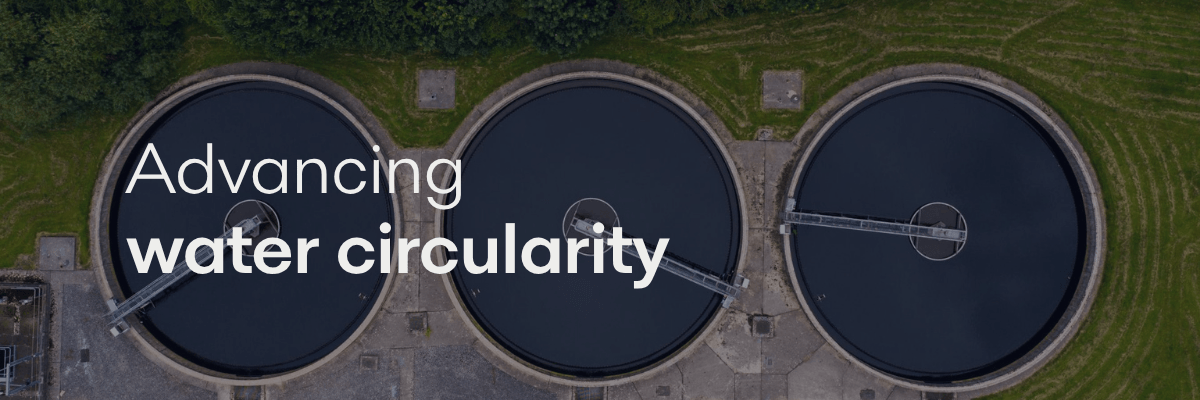
How much more can we do with the drops we already have?
Water scarcity is no longer simply an environmental concern. Across the Middle East and Africa, it is increasingly an economic, infrastructure and industrial challenge, one that demands a fundamental rethink of how water is sourced, used, treated and reused.
The Middle East is among the most water-stressed regions in the world. With renewable water resources under pressure from population growth, urbanization and climate change, securing future water supplies will require more than developing new sources. It will require making every drop work harder.
Africa presents a different but equally complex picture. While the continent has significant freshwater resources, access is highly uneven and many countries continue to face gaps in water infrastructure, treatment and sanitation. The challenge, therefore, is not simply about availability. It is about building systems that can make water accessible, resilient and reusable.
From scarcity to circularity
For decades, the response to water stress has focused largely on increasing supply, through groundwater, reservoirs, desalination and water transfers. These remain important, particularly across the Middle East. But long-term water resilience requires another dimension: using existing water more intelligently.
This is where the concept of water circularity becomes increasingly relevant.
Instead of following a linear model of extract, use and discharge, industries can rethink water as a resource that can be recovered, treated and returned to the process.
Wastewater, in particular, represents a significant opportunity. Treatment technologies can enable water recovery and reuse, while separation processes can help recover valuable materials and reduce the volume of waste requiring disposal.
The objective is not simply to treat wastewater at the end of a process. It is to design systems where fewer resources are lost in the first place.
Technology at the heart of progress
Technology will play an important role in making this transition possible. But the most effective solutions are unlikely to come from looking at individual technologies in isolation.
Water, energy and industrial processes are deeply interconnected. Water treatment and desalination require energy, while industries depend on water for cooling, processing and cleaning. Improving the efficiency of one system can therefore have implications for the others.
Heat recovery, efficient separation, water recirculation and advanced wastewater treatment can help industries reduce freshwater consumption while improving overall resource efficiency.
This systems-level approach will become increasingly important as the region invests in new industrial capacity, food and beverage production, energy infrastructure and rapidly growing urban centers.
Turning infrastructure into an opportunity
The scale of the challenge also presents an opportunity to rethink infrastructure.
Future-ready water infrastructure will need to do more than transport and treat water. It will need to recover resources, minimize losses and support reuse wherever technically and economically viable.
This shift is already taking place. At Alfa Laval’s Jubail and Yanbu service centers in Saudi Arabia, water used for hydrostatic pressure testing of heat exchangers is treated and recirculated, reducing water consumption for the process by around 90% and saving more than one million liters annually.
It is a relatively small example against the scale of the region’s water challenge, but it illustrates an important principle: water resilience does not always mean finding more water. Sometimes it means changing how we use the water we already have.
Building water resilience together
No one single technology or organization can solve the water challenge facing the Middle East and Africa. Progress will require collaboration between governments, infrastructure providers, technology companies and industries, supported by investment, sound policy and a willingness to rethink conventional approaches.
For industry, the direction is increasingly clear: move from water consumption towards water stewardship; from wastewater treatment towards resource recovery; and from linear processes towards circular ones.
The question for a water-stressed region is therefore no longer only, “Where will the next drop come from?”
It is also: “How much more can we do with the drops we already have?”
That shift in thinking could be one of the most important steps towards a more water-resilient Middle East and Africa.
About the author
Dilara Deveci
Dilara Deveci is the Head of Cluster Marketing for Alfa Laval Middle East & Africa, where she leads the region's marketing strategy and transformation agenda, driving growth and strengthening customer engagement across key markets. With over 18 years of professional experience, including more than 15 years in marketing, she brings extensive expertise in strategic marketing, brand building, digital transformation, and commercial excellence. Holding a B.Sc. in Business Administration, Dilara is a key member of the Middle East & Africa Management Team, contributing to the region's long-term growth and success through customer-centric and business-focused marketing initiatives.