
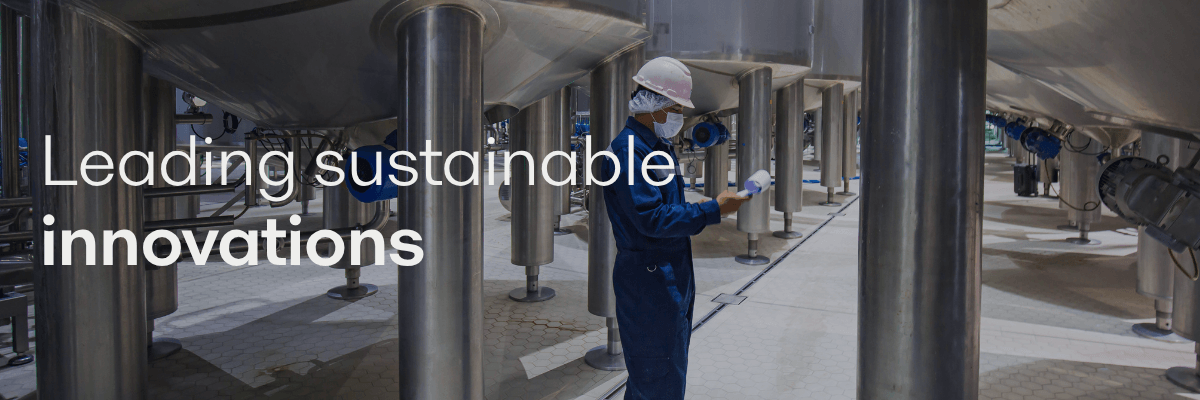
Cleaner processes, greener future: How separation technology and heat transfer drive sustainability in food & pharma
As the world’s population grows and the demand for food and pharmaceuticals rises, industries face a dual challenge: increasing production while reducing environmental impact. The 2025 Alfa Laval Sustainability Report offers a compelling look at how advanced separation technology and heat transfer solutions are transforming the food and pharmaceutical sectors making processes cleaner, more efficient, and more sustainable.
The Sustainability Imperative in Food & Pharma
By 2060, the global population is expected to reach 10 billion, with the demand for food, clean water, and medicine soaring. The food and pharmaceutical industries are under pressure to deliver safe, high-quality products while minimizing resource use, waste, and emissions. Regulatory requirements, consumer expectations, and the urgent need to address climate change are driving a shift toward sustainable manufacturing.
The Role of Separation Technology
Separation technology encompassing separators, decanter centrifuges, membranes, and filters is at the heart of many food and pharma processes. These technologies enable the efficient separation of liquids from solids, purification of ingredients, and removal of contaminants. In the pharmaceutical industry, separation is critical for ensuring product purity and compliance with stringent quality standards. In food processing, it helps maximize yield, improve product quality, and reduce waste.
Key Sustainability Benefits:
- Resource Efficiency: Advanced separation systems reduce water and raw material consumption by enabling the reuse and recycling of process streams.
- Waste Minimization: By extracting more value from raw materials and reducing by-products, these technologies help divert waste from landfills and lower disposal costs.
- Energy Savings: Modern separators and decanters are designed for low energy consumption, contributing to lower greenhouse gas (GHG) emissions.
Case in Point: Alfa Laval’s Optiwia water recirculation system for centrifuges can reduce water consumption by up to 70% in beverage production, while the Aldec decanter centrifuge saves thousands of cubic meters of water annually in wastewater treatment.
Heat Transfer: Unlocking Energy Efficiency
Heat exchangers are essential for temperature control, pasteurization, sterilization, and energy recovery in food and pharma plants. Alfa Laval’s compact heat exchangers are engineered to optimize energy consumption, recover waste heat, and reduce reliance on fossil fuels.
Key Sustainability Benefits:
- Energy Recovery: Heat exchangers capture and reuse thermal energy from process streams, reducing the need for additional heating or cooling.
- GHG Emissions Reduction: By improving energy efficiency, these systems directly lower the carbon footprint of manufacturing operations.
- Process Optimization: Precise temperature control ensures product quality and safety, while minimizing energy waste.
Impact at Scale: In 2025, Alfa Laval’s heat exchangers delivered solutions with a heat transfer potential of nearly 200 GW, translating to an estimated positive climate impact of 76 million tCO2e, equivalent to the annual emissions of several million cars.
After-Sales Services: Sustaining Performance Over Time
Technology alone does not deliver sustainability; performance must be maintained throughout the equipment lifecycle. This is where after-sales services make a measurable difference.
Remote support, digital troubleshooting, condition-based maintenance, spare parts planning, and performance audits help customers keep separators, decanters, membranes, filters, and heat exchangers running efficiently over time. By enabling faster diagnostics and expert support without always requiring a physical site visit, remote service solutions can reduce downtime, travel-related emissions, and operational losses.
Regular maintenance and performance optimization also help ensure that equipment continues to consume less energy, water, and chemicals while maintaining product quality and regulatory compliance. For food and pharmaceutical producers, this means greater uptime, improved process reliability, and a more sustainable total cost of ownership.
In this way, after-sales services are not only about keeping equipment running, but they are also about helping customers sustain efficiency, extend asset life, and achieve their long-term sustainability goals.
Circularity and Lifecycle Thinking
Sustainability in food and pharma isn’t just about efficient processes; it’s about designing for circularity. Alfa Laval’s approach includes:
- Durable, Repairable Equipment: Products have been built to last decades, with modular designs for easy maintenance and upgrades.
- Take-Back and Recycling: End-of-life equipment is recovered and recycled, closing the loop on valuable materials like stainless steel and titanium.
- Service, Remote Support and Digitalization: After-sales services play a critical role in extending equipment life and ensuring that separation and heat transfer systems continue to operate at peak efficiency. Through remote support, condition monitoring, predictive maintenance, and expert diagnostics, customers can identify issues earlier, reduce unplanned downtime, optimize energy and water consumption, and avoid unnecessary site visits. This not only improves operational reliability but also helps reduce the environmental footprint across the equipment lifecycle.
Measurable Progress and Ambitious Targets
Alfa Laval’s 2025 report highlights ambitious goals:
- Net Zero Scope 1 & 2 Emissions by 2027: Through electrification, renewable energy, and energy efficiency.
- 50% Reduction in Scope 3 Emissions by 2030: By innovating products for lower energy use and sourcing low-emission materials.
- 95% Waste Diversion by 2030: Through recycling, reuse, and circular business models.
- 5% Annual Improvement in Water Efficiency: Across all operations, not just in water-stressed regions.
The Path Forward: Collaboration and Innovation
Achieving a greener future for food and pharma requires collaboration across the value chain. Alfa Laval works closely with suppliers to source low-carbon metals and with customers to develop solutions that meet their sustainability goals. Continuous investment in R&D, about 2.5% of net sales annually, ensures that new technologies keep pushing the boundaries of what’s possible.
Just as importantly, long-term customer partnerships and lifecycle services help ensure that sustainability gains are maintained year after year. By combining advanced technology with expert service support, manufacturers can continue improving efficiency, reliability, and environmental performance throughout the lifetime of their equipment.
Separation technology and heat transfer are more than just engineering solutions; they are catalysts for sustainable transformation in the food and pharmaceutical industries. By embracing these innovations, manufacturers can meet growing global demand while protecting the planet’s resources for future generations.
Cleaner processes truly do pave the way for a greener future.
About the Author
Pooja Kataria
Pooja Kataria leads After Sales Services for Separation Technologies and Heat Transfer at Alfa Laval, supporting customers across food, pharma, and process industries. She focuses on helping customers improve uptime, efficiency, and sustainability through lifecycle services, remote support, and performance optimization.