
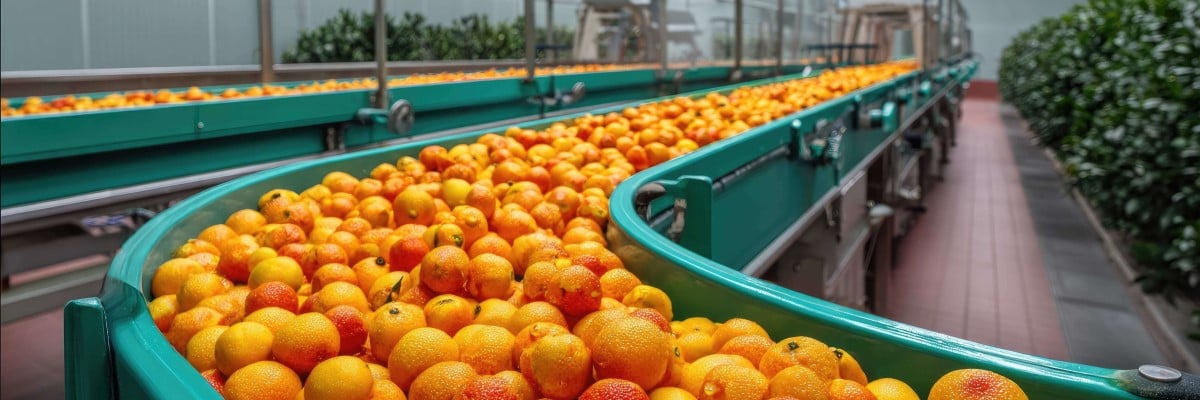
The hidden climate cost of food processing and how to address it
The climate cost of food processing is often hidden in plain sight, overshadowed by the more visible stages of the food system, farming, packaging, transport, and consumer waste. Yet, as the world's population grows and the demand for safe, nutritious food and effective medicines intensifies, the sustainability of food and pharma processing becomes a defining challenge and a remarkable opportunity. At Alfa Laval, we view this not as a burden, but as an opportunity to pioneer a positive impact, improving the essentials of life for billions of people worldwide.
Food processing sits at the heart of modern society, enabling food safety, extending shelf life, and supporting global distribution. But it is also resource intensive, consuming vast amounts of energy and water, generating waste, and requiring stringent hygiene standards. The industry faces mounting pressures: rising resource costs, tightening regulations, water scarcity, and the urgent need to reduce emissions across the value chain. These challenges are not isolated, they are interconnected, and they demand a holistic response.
Alfa Laval's approach is rooted in partnership and innovation. We work side by side with customers, suppliers, and peers, co-creating solutions that unlock the full potential of sustainable food and pharma production. Our technologies, heat exchangers, separators, decanter centrifuges, membranes, filters, pumps, valves, and tank cleaning equipment, are designed to optimize energy and water use, reduce waste, and ensure the highest standards of safety and hygiene. Every improvement is a step towards circularity, where resources are recovered, reused, and transformed from waste into value.
Efficiency and circularity are not competing priorities; they are mutually reinforcing. By improving energy and water efficiency, minimizing waste, and maximizing resource recovery, we help customers strengthen operational resilience, reduce costs, and support food security. Sustainable processing is not about compromise, it is about creating lasting value, both for business and society.
Importantly, sustainability solutions should not be viewed as an additional cost for businesses. In many cases, investments in energy-efficient and resource-optimized technologies generate measurable returns through lower energy consumption, reduced water usage, improved product yield, and lower operating costs over the lifetime of the asset. The environmental benefits of reducing greenhouse gas emissions and protecting natural resources come alongside tangible commercial gains, making sustainability a business enabler rather than a business expense. Increasingly, the most sustainable operations are also the most efficient and competitive ones.
The question facing food and pharma processors is no longer whether sustainability can be afforded, but whether inefficiency can.
As climate pressures increase, resilient food systems will depend on how effectively industries manage resources throughout the processing stage.
Achieving sustainability goals requires more than ambition; it requires measurable outcomes. By combining science-based technologies with analytical expertise, Alfa Laval helps customers quantify the environmental and operational impact of their investments. Measuring performance before and after implementation across key parameters such as energy consumption, water usage, emissions intensity, heat recovery, and resource efficiency enables businesses to make informed decisions, build a robust business case for sustainability initiatives, and demonstrate progress with confidence.
Our commitment is clear. Alfa Laval aims for net zero greenhouse gas emissions in our own operations by 2027, and across our value chain by 2050. We target a 95% reduction in scope 1 and 2 emissions by 2030, and a 50% reduction in scope 3 emissions. We drive annual improvements in energy and water efficiency, divert waste from disposal, and foster a culture of integrity, safety, and inclusion. These ambitions are not just numbers; they are the foundation of responsible growth and technological leadership.
Sustainability is no longer a compliance exercise or a reporting requirement. It has become a strategic lever for resilience, competitiveness, profitability, and long-term growth. The sustainability of food systems is not determined solely by what we grow, but by how we process, preserve, distribute, and manage resources throughout the journey from production to consumption. If the world is serious about building sustainable food systems, food processing can no longer remain a hidden part of the climate conversation. It must become central to it.
At Alfa Laval, we are proud to lead this transition, pioneering positive impact and delivering solutions that help our customers and the world move forward sustainably.
About the Author
Dhiraj Singh
Dhiraj is a seasoned business leader with over 33 years of international experience across the Middle East, East Asia, and South Asia. He joined Alfa Laval India Private Limited in 1992 as a Trainee Engineer and has progressed through several leadership roles to become the Regional Vice President – Food & Pharma Division, Middle East, East & South Africa, based in Dubai.